
Introduction
It’s been a while since I’ve actually been excited for a Dragon Quest game. Don’t get me wrong—I appreciate the HD-2D remakes of Dragon Quest I through III. They’re fantastic games, but I was never a fanatic of the Erdrick trilogy, even before the remakes. They’re iconic pieces of gaming history, but their bare-bone structure and general lack of narrative have always put them lower on my list. I appreciate a good story and charming characters probably more than anything else. Fortunately, Dragon Quest VII has that in spades.
In fact, when I was playing the Dragon Quest VII demo, I realized the past five years of Dragon Quest has bored me. The series became something I was “supposed to” play. It’s a big part of my online identity. If I don’t like Dragon Quest, then what is this website for?
But the Dragon Quest VII Re-imagined demo revived a spark that I haven’t felt since I first finished playing the series for the first time.
Visuals
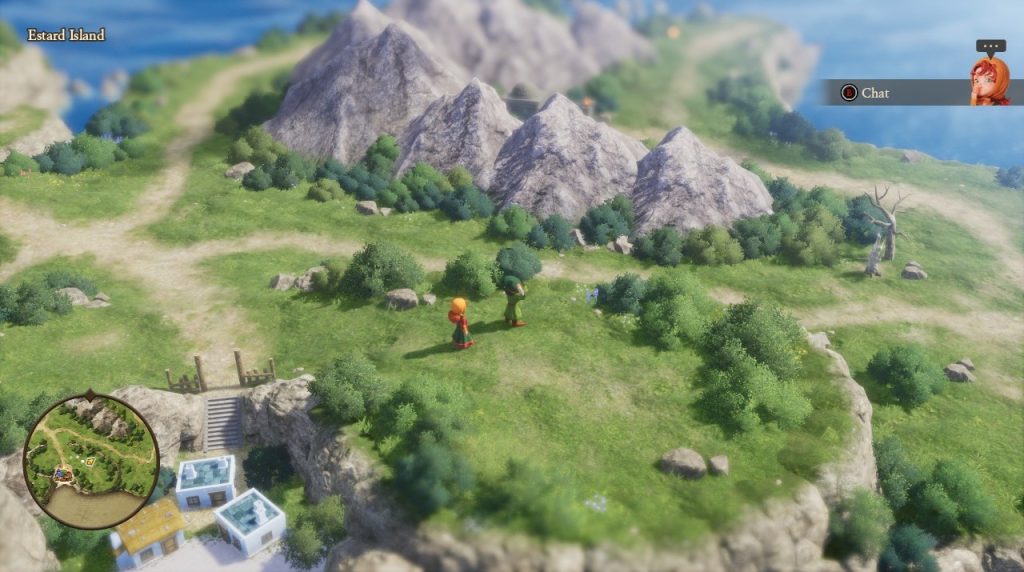
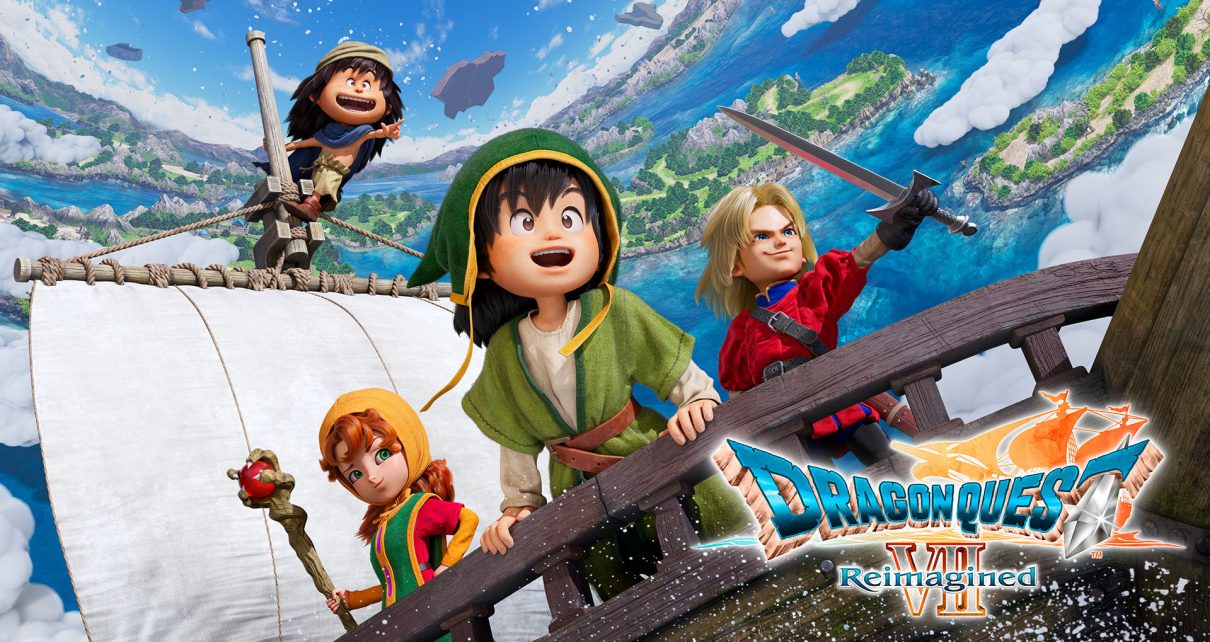
Dragon Quest VII is perhaps the most beautiful game in the franchise yet. The details are stunning, and while the colors are perhaps not as bright and cheery as the 3DS version, the overall vibe it gives is still consistently Dragon Quest. The game is also well optimized. Full disclaimer: I played this on my Steam Deck with all settings maxed, and I was still able to lower TDP to 13 without performance loss.
Sound & Ambiance
The soundtrack of Dragon Quest VII stands unparalleled within the franchise. It represents the peak of Koichi Sugiyama’s compositional work for the series. Although everything that came after features excellent music, VII marks the point where he achieved the pinnacle of DQ music.
While the mbience doesn’t reach the level of the HD-2D remakes, the soundtrack does a lot of heavy lifting in establishing mood. Lively festival music will have you tapping along, and the eerie dungeon theme makes you feel as though you’re discovering long-lost secrets. The battle theme is arguably the finest in the series—so much so that it was repurposed as the fishing theme in the Japan-exclusive MMO Dragon Quest X. Though I’m personally more fond of the Dragon Quest V soundtrack, I must admit that Dragon Quest VII features my favorite battle theme in the entire franchise.
Mechanics
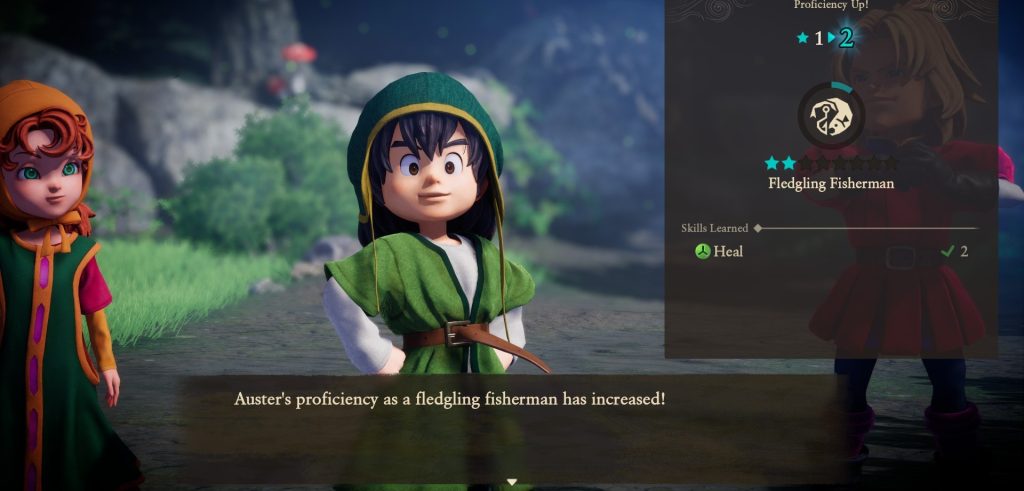
Dragon Quest VII Re-imagined retains the combat and progression system that made the original so engaging, allowing characters to master various vocations and mix abilities in creative ways. The turn-based combat remains faithful to classic Dragon Quest design: straightforward yet strategic, rewarding players who understand enemy patterns and exploit weaknesses.
Yet, one of my favorite aspects of the previous versions—monster classes—have been left behind. I cannot claim in honesty that everyone will miss them. Many players didn’t realize they existed. Which causes me to wonder why remove them at all. They were another optional element that only extended game time if you chose for it to. One could argue their existence upset difficulty balance, if it were at all apparent that difficulty was a major concern in the current era of Dragon Quest. We exist in a time when even increased difficulty modes are not quite as hard as the original entries. I can’t image any dev is concerned about trivializing game difficulty with completely optional systems.
The remake introduces quality-of-life improvements that modernize the experience without compromising its essence. Fast travel between visited locations eliminates tedious backtracking, while the inclusion of map markers—though somewhat at odds with the game’s exploratory spirit—does help mitigate the quest flag confusion that plagued the original. Personally, I wish there was a toggle to turn them off. There is sufficient diirection in this game already.
Combat pacing feels snappier than previous versions, with animations that don’t overstay their welcome. Random encounter rates seem balanced, frequent enough to keep you engaged with the progression systems without becoming frustrating. Boss fights (at least the single one included in the demo) remain memorable set pieces that test your understanding of the mechanics without resorting to unfair difficulty spikes.
Writing
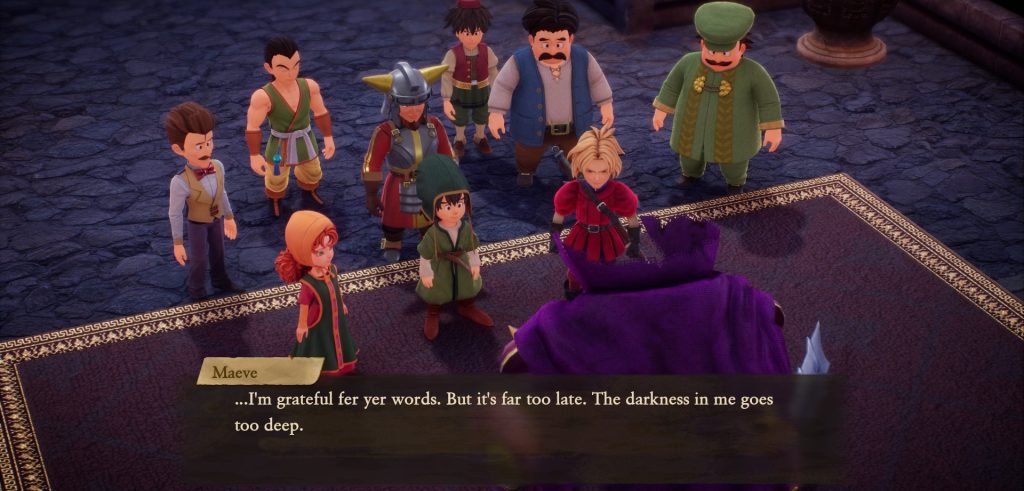
Dragon Quest VII‘s greatest strength lies in its episodic storytelling structure. Each island you restore presents a self-contained narrative—a snapshot of human experience frozen in time. You’ll encounter tales of love and loss, sacrifice and redemption, hope and despair. Unlike the grand, world-spanning narratives of other JRPGs, Dragon Quest VII focuses on intimate, human-scale stories.
These vignettes hit hard because they’re honest. The writing doesn’t shy from tragedy. You’ll witness the consequences of greed, the pain of unrequited love, the horror of war. But it also celebrates human resilience, compassion, and the small acts of kindness that define communities. Some islands will leave you heartbroken; others will warm your soul.
The party members themselves are memorable when they’re not endearing. Each character feels distinct and contributes meaningfully to the journey. Maribel’s sharp tongue elicits emotion from the player, Kiefer’s sense of adventure drives the early narrative, Gabo’s enthusiasm lifts spirits, and Melvin’s stoicism provides an anchor for the group.
Restoring a fragmented world gives the narrative thematic cohesion. Revisiting restored islands to see how time has changed the lives you touched creates a rare sense of consequence and connection. However, Re-imagined‘s trimmed story content has me worried about the impact of missing classic vignettes on what remains one of my favorite video game narratives.
The localization maintains Dragon Quest‘s signature charm: playful puns, distinct regional dialects, and a lighthearted tone that contrasts beautifully with the darker story moments. This tonal balance prevents the game from becoming oppressively grim while still treating serious subjects with appropriate weight.
Comparison Corner: Remakes vs. Original
During the promotional campaign, virtually nothing they revealed about the new remake impressed me. Removing islands seemed like sacrilege. Eliminating monster classes was a disappointment. And cutting side content struck me as a move in the wrong direction.
Dragon Quest VII‘s greatest weakness is its length, which rivals that of Dragon Quest XI. However, while a game like Dragon Quest XI offers additional activities such as crafting, side quests, and minigames to provide relief from the main narrative and vary the gameplay, Dragon Quest VII is purely story-driven. If it were a meal, it would be all meat and no vegetables. Expanding the side content in Dragon Quest VII would significantly improve its pacing. Removing features like the immigrant town and monster classes means there isn’t much to do beyond progressing through the main story.
Cutting entire islands is akin to removing episodes from a television series. While fans may dismiss some of it as filler, there will always be content that resonates as someone’s favorite. You can’t win the cut content game—someone will be disappointed. At minimum, I hoped they would retain the islands as optional content, but that doesn’t appear to be the case (or perhaps we’ll find out when the full game launches).
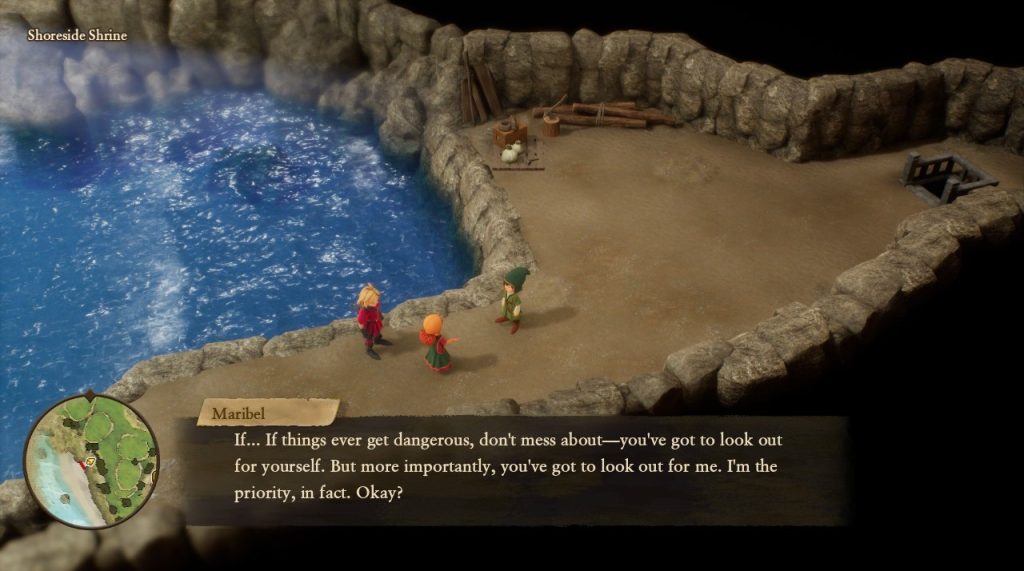
The Opening Sequence Issue
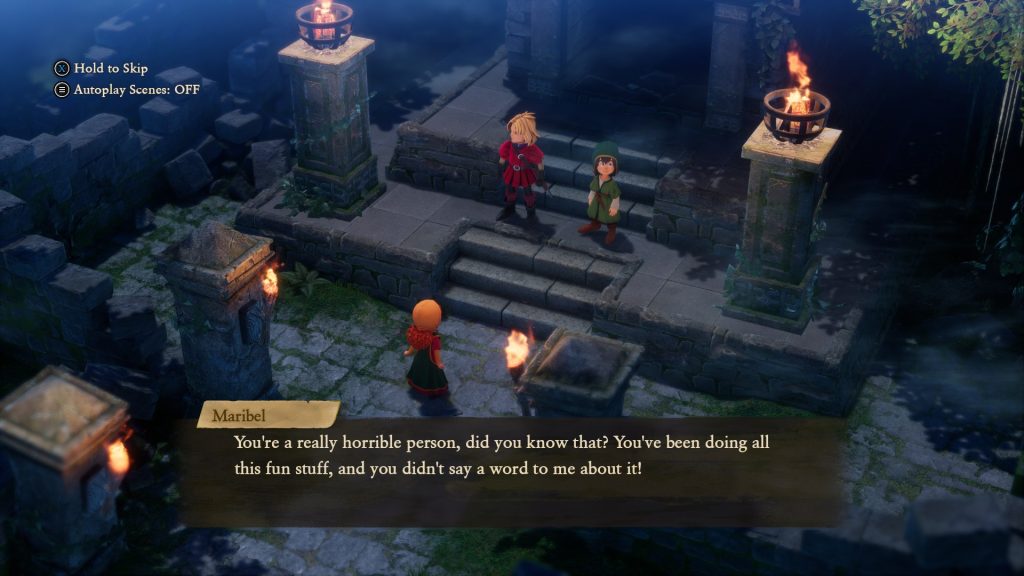
The PlayStation One version featured the superior opening, despite its excessive length. It needed trimming—they could have condensed it while preserving the core experience. The 3DS version eliminated it entirely and replaced it with dialogue from a magical sidekick, the Caretaker, which destroyed the isolated intro and that sense of solitude when exploring those ruins.
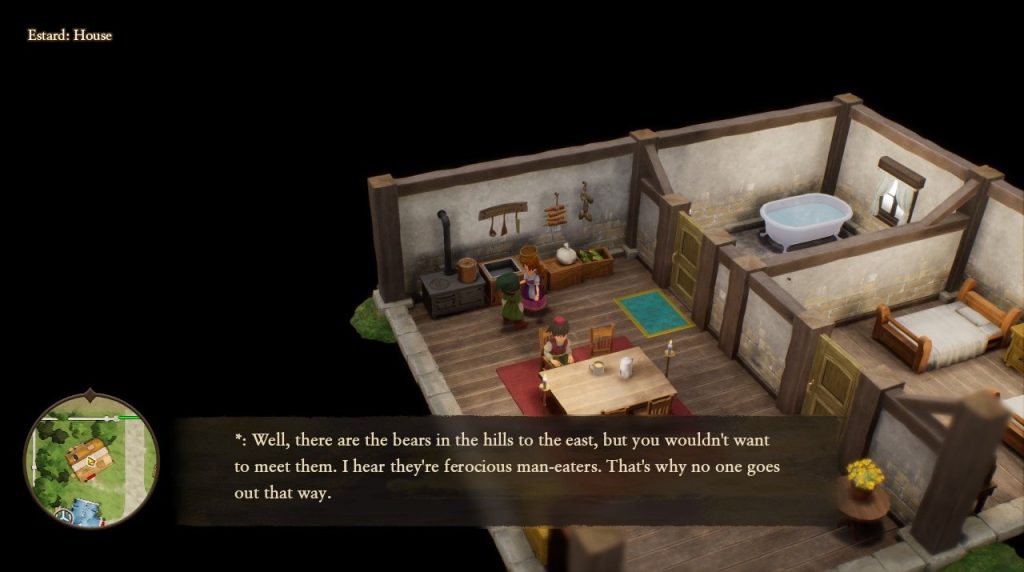
Dragon Quest VII Re-imagined removes it completely, instead having you explore the town amid cheerful and vibrant atmosphere, chatting with NPCs. That’s acceptable, but it’s not what Dragon Quest VII’s opening was meant to be. The original opening established the tone for the entire game, and they’ve never returned to that vision.
I find it ironic that they criticized the intro’s pacing issues and aimed to address them with this remake, yet they haven’t really solved anything, because the biggest flaw in the original was that it takes roughly an hour or longer before you encounter your first battle due to that introductory puzzle dungeon. And this version still takes about an hour. The only distinction is they’ve swapped one poorly paced introduction for a different style of poorly paced introduction. It feels like the new developers selected content based on their personal preferences, and that genuinely bothers me.
The Party Chat Tragedy
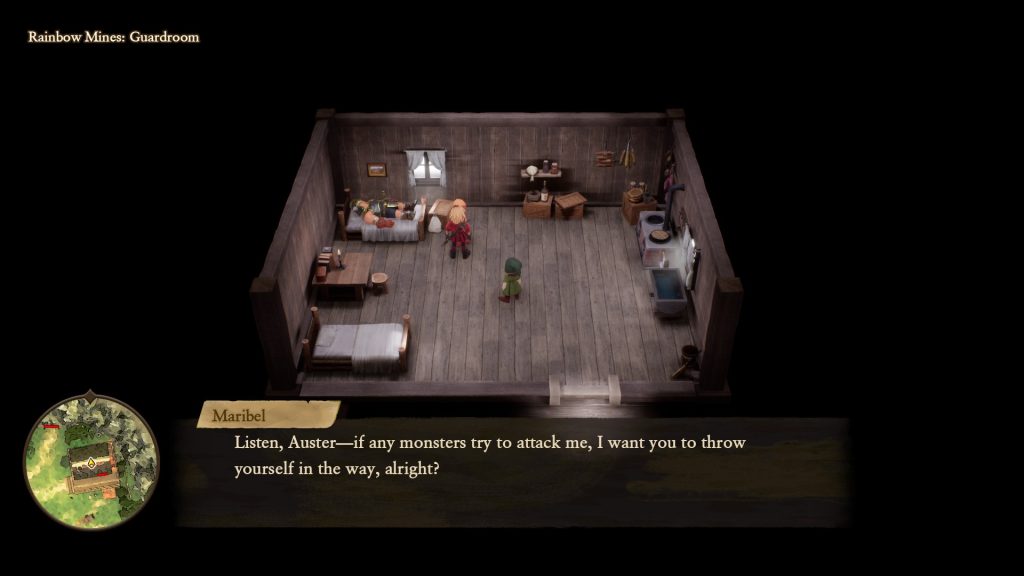
Party chat has been severely diminished in this remake. Originally, after speaking with virtually any NPC or witnessing almost any event in the game, your party members would have fresh commentary. They would respond to the world around them, react to what others said, and it gave them depth as characters.
Party chat exists in the remake, but now they only speak when there’s something critical to convey, guiding you toward the next story objective, which feels redundant given the inclusion of map markers. I cannot overstate how significant this loss is. In fact, if they hadn’t decided to remove entire islands and narrative segments in their effort to streamline the story, I would consider gutting party chat their greatest misstep.
Dragon Quest VII was sluggishly paced, but much of that runtime could have been addressed by eliminating quest flags, making minor narrative adjustments, and removing the backtracking. It would remain a long RPG, but I believe these changes would reduce it to roughly 60 or 70 hours instead of the original 100.
Instead, they’re implementing map markers to address the quest flag problem, cutting content to reduce the length, and removing supplementary dialogue for no apparent reason. It was optional—you weren’t required to view it—but it made such a meaningful difference. It brought authenticity to the world when you engaged with it.
Nostalgia Musings
I was talking with a friend recently and realized something odd: I can’t remember what was happening in my life during any of my Dragon Quest I–III playthroughs. I remember the platforms—Game Boy Color, Android, Switch, NES—but nothing about my life at the time. That’s unusual for me. I usually subconsciously tie my playthroughs to whatever’s going on around me.
Dragon Quest VII is different. I could write pages about it.
My wife gifted me the PlayStation One version when we were dating. I didn’t own a PS1, so I played the disc on my laptop emulator hooked up to the TV. I started in 2013 while watching classic Doctor Who for the first time. Those history-spanning parables paired well with Dragon Quest VII‘s time-travel adventure.
I eventuallygot stuck at the Hellcloud fight and took a year off. When I came back in 2015 to finish it, I was relieved just to be done. I enjoyed it, but swore I’d never suffer its quest flags again.
Then a month later, Square Enix announced the 3DS localization. When it finally released, I bought it immediately. I’d play it in the break room at the end of the day, killing time until my wife got off work so we could drive home together. I played it on the couch with Arrested Development running in the background. I even brought my 3DS to the Oak Mountain Amphitheater for a Joan Jett concert. Heart and Cheap Trick were the opening acts.
I closed off my time with the 3DS remake just before my wedding that December. After two playthroughs back-to-back, I was sure I was done with Dragon Quest VII for good. Yet I’d come away with warm memories of a flawed game I genuinely loved.
That brings us to today. I never expected VII Re-imagined. Why remake this game a third time when other entries could benefit from modernization more? The demo proves both my excitement and concerns justified. It’s flawed but beautiful, with stunning visuals and an unmatched soundtrack that preserves the emotion. Yet the gutted party chat, missing side content, and lingering pacing issues prevent this from being the definitive version I’d hoped for.
Still, I’m eager to return to Estard. Maybe it’s nostalgia. Or maybe Dragon Quest VII—even in this compromised form—offers something rare: a sprawling, contemplative journey that trusts you to find meaning in the quiet moments.
For series veterans curious about this new version, temper your expectations but don’t dismiss it entirely. For newcomers, this is a chance to experience one of the most ambitious entries in the franchise. Just know that you’re playing a streamlined interpretation rather than the full vision.
Dragon Quest VII Re-imagined has reignited my passion for this series. And sometimes, that’s enough.